
Sashiko-ori Remnants and Vintage Kimono Fabrics
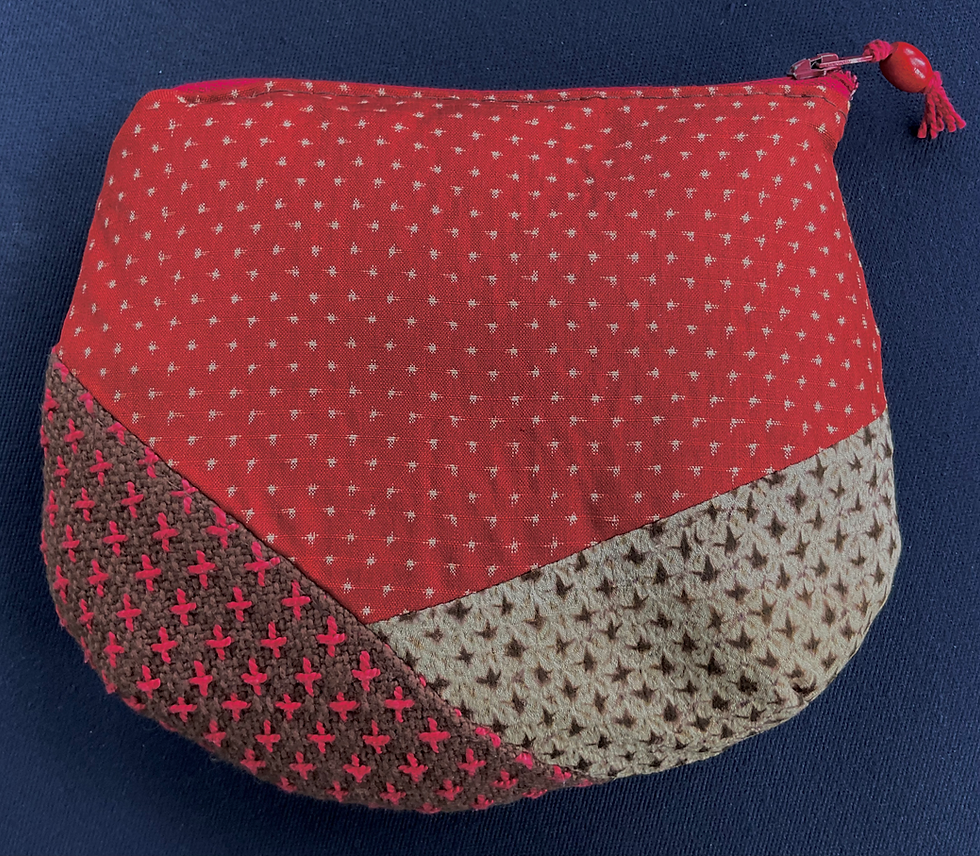
Remnants from other Sashiko-ori projects can be put to good use in small projects such as these bags that are based on a common threading.
Pairing sashiko-ori fabric with vintage kimono fabric is in keeping with the tradition of piecing different fabrics for an attractive and functional purpose. Two things to look for
in compatible fabrics are similarities in colors and patterns and contrast in scale, value or style.

The simple ju-stitch or 10-stitch cross, is a common pattern with many possible variations.
A dark brown ground warp is the common element in these three small bags. In each one the pattern thread is different, and two have hand stitching added.
Bag #1 combines a 3-color composition in a rust red silk kasuri (ikat) with cream crosses, a tan silk shibori with brown crosses, and a brown cotton sashiko-ori with red crosses.
The hues and repeats of the pattern relate the fabrics to each other. The grouping is made more interesting with crosses that are three different sizes and fabrics with different textures.
Pattern threads in the sashiko-ori are one size thicker than the ground threads.
The next two bags use the same threading as Bag #1. However, the pattern threads in them are the same size as the ground threads, but they are doubled.
Bag #2 pairs a black and rose woven silk pattern kimono fabric with a brown and rose cotton sashiko-ori pattern with added diagonal hitomezashi-style hand stitching.

The lozenge shape of the patterns and their colors tie the designs together while the contrast in motif size and overall value adds interest.
Bag #3 uses a different tie-up and treadling, and again the fabric uses doubled pattern threads in warp and weft.


This glasses case echos the colors in the kimono silk lining in hue and value. Where the lining is floral, the case is a geometric contrast. The sashiko-ori tortoise shell pattern base is embellished with partial kuguri lacing on the lower half of the case.

Comments